Traffic Offenses
Defense for serious traffic charges and other driving-related offenses.
Learn More


A marijuana trafficking charge is significantly more serious than an ordinary marijuana possession allegation in North Carolina. When the amount involved exceeds the trafficking threshold, a person can face a felony charge carrying substantial prison time and fines.
Importantly, prosecutors do not have to allege that marijuana was actually sold to bring a trafficking charge. North Carolina law applies to selling, manufacturing, delivering, transporting or possessing more than 10 pounds of marijuana.
Attorney Laura M. Baker represents individuals facing serious drug charges in Concord and throughout Cabarrus County. A defense should begin with a careful examination of the alleged marijuana, its weight, where it was discovered, who allegedly possessed it and how law enforcement obtained the evidence.
North Carolina law treats trafficking as a quantity-based marijuana offense. Under G.S. §90-95(h)(1), a person who sells, manufactures, delivers, transports or possesses more than 10 pounds of marijuana can be charged with trafficking in marijuana.
This distinction is important because a trafficking allegation does not necessarily mean the State is accusing someone of running a large-scale drug distribution operation. Possession or transportation of a qualifying quantity can itself support a trafficking charge when the other required elements are established.
The amount allegedly involved also determines which level of the trafficking statute applies, making the identification and weight of the substance particularly important evidence.
Where was the marijuana discovered, who controlled the location or property, and what evidence connects the accused person to it? North Carolina recognizes issues involving both actual and constructive possession.
The alleged weight is particularly important because marijuana trafficking begins only when the amount exceeds 10 pounds, with progressively higher statutory levels at greater weights.
The defense can examine how officers obtained the marijuana and other evidence, including circumstances involving vehicle searches, homes, search warrants and other law-enforcement activity.
Text messages, phone records, surveillance, witness statements, financial evidence and statements made to investigators may become part of a trafficking prosecution and should be evaluated in context.
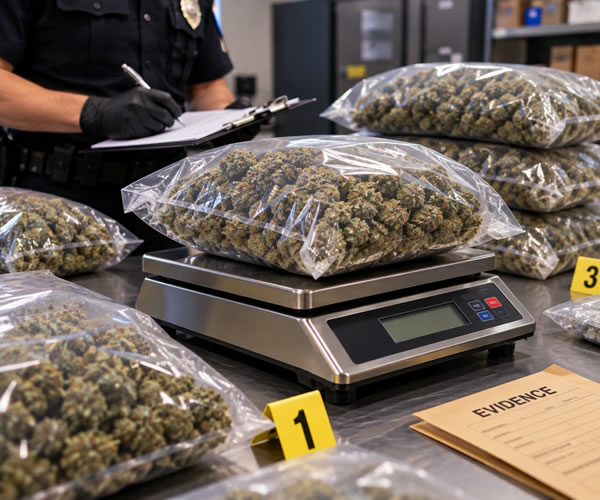
North Carolina divides marijuana trafficking into several levels according to the weight allegedly involved.
The current statute provides the following quantity ranges:
More than 10 but less than 50 pounds: Class H felony, 25–39 months, with a fine of at least $5,000.
50 but less than 2,000 pounds: Class G felony, 35–51 months, with a fine of at least $25,000.
2,000 but less than 10,000 pounds: Class F felony, 70–93 months, with a fine of at least $50,000.
10,000 pounds or more: Class D felony, 175–222 months, with a fine of at least $200,000.
Because the alleged weight can dramatically change the seriousness of the charge, determining what was weighed and how that quantity was established can be an important part of reviewing the prosecution's evidence.
The word “trafficking” can give the impression that prosecutors must prove marijuana was bought or sold. North Carolina's statute is broader.
A trafficking charge can be based on the alleged possession or transportation of more than 10 pounds of marijuana even without an alleged completed sale.
That makes possession an important issue in many cases. Marijuana found in a vehicle, residence or other location may raise questions about who actually possessed it, who exercised control over the location and what the accused person knew.
Those questions should be examined based on the particular evidence rather than assuming that simply being near marijuana establishes responsibility for it.
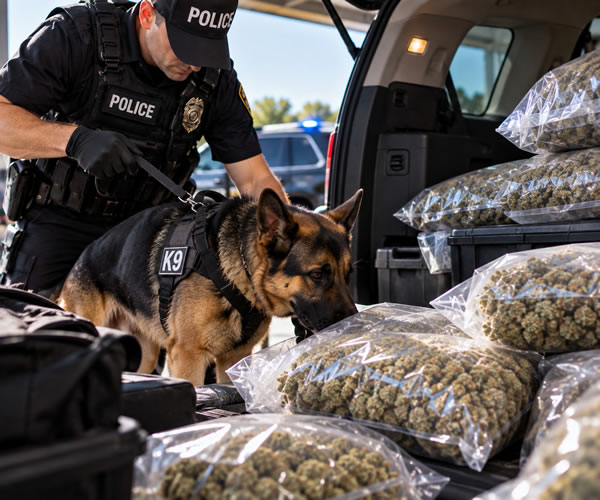
The circumstances that led law enforcement to the marijuana can be an important part of the defense.
A trafficking investigation might begin with a traffic stop, vehicle search, search of a residence, surveillance operation, confidential source, package investigation or execution of a search warrant.
The defense can examine what occurred before and during the search, what officers seized, how the evidence was documented and what other evidence prosecutors intend to use.
A marijuana trafficking case involves more than the quantity alleged in a police report. The entire investigation should be reviewed.

A marijuana trafficking charge can expose a person to substantial criminal penalties. When the stakes are this high, the specific facts surrounding the investigation and alleged possession matter.
Attorney Laura M. Baker works directly with her clients to understand what happened and carefully review the prosecution's case.
From the circumstances of the search and alleged possession to the marijuana's weight and other evidence, the defense strategy should be built around the facts of the individual case.
Under current North Carolina law, trafficking in marijuana begins when the quantity is more than 10 pounds.
No. The trafficking statute also covers manufacturing, delivering, transporting and possessing more than 10 pounds of marijuana.
Yes. Marijuana trafficking is a felony, with the classification ranging from Class H through Class D depending on the quantity involved.
Potentially. If the quantity exceeds the statutory threshold, prosecutors may pursue trafficking by possession or transportation. Whether the evidence establishes the necessary elements depends on the facts of the individual case.
The statutory trafficking level and associated penalties increase according to the amount involved, beginning at more than 10 pounds and increasing at 50, 2,000 and 10,000 pounds.
The circumstances surrounding a search can be reviewed by a defense attorney to determine whether legal issues exist concerning evidence obtained during the investigation.
Attorney Laura M. Baker represents individuals facing marijuana trafficking and other serious drug charges in Concord and throughout Cabarrus County, North Carolina.
Marijuana trafficking cases may arise from traffic stops, vehicle searches, searches of homes or other property, packages, surveillance and larger drug investigations. Regardless of how an investigation began, the evidence connecting the accused person to the marijuana and the quantity attributed to that person should be carefully examined.
If you have been arrested, charged or are under investigation for marijuana trafficking in Cabarrus County, obtaining legal advice early can help you better understand the allegations and your options.