Traffic Offenses
Defense for serious traffic charges and other driving-related offenses.
Learn More


A past arrest, criminal charge or conviction can continue to appear on background checks long after the case has ended. For some people, North Carolina law provides a process known as expunction—or expungement—that can remove eligible criminal records from public records.
Attorney Laura M. Baker helps clients in Concord and throughout Cabarrus County determine whether their records may qualify. Because eligibility depends on factors such as the charge, how the case ended, prior convictions and applicable waiting periods, the first step is reviewing your individual record.
An expunction is a legal process used to remove an eligible criminal charge or conviction from a person’s record and seal or destroy certain state records associated with the arrest, charge or conviction. North Carolina law provides several different expunction statutes rather than one rule that applies to every criminal record.
The effect of an expunction can be significant, but it does not necessarily eliminate every possible consequence in every context. Determining what an expunction can accomplish begins with identifying which North Carolina law applies to the particular record.
North Carolina has numerous expunction laws, and eligibility depends on the circumstances of the individual case.
A dismissal, not-guilty finding and criminal conviction can fall under different expunction provisions.
The offense itself matters. Some misdemeanors and felonies may qualify under particular statutes, while other offenses are excluded.
Prior charges, convictions and previous expunctions can affect eligibility under some North Carolina expunction laws.
Some records may qualify relatively soon after a case ends, while certain conviction-based expunctions have statutory waiting periods or other requirements.
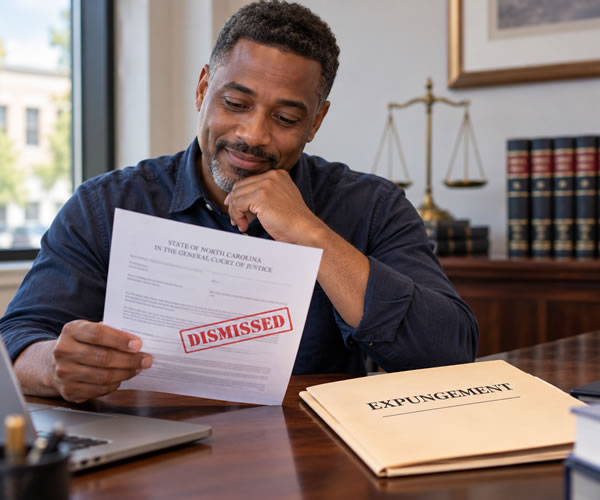
North Carolina law provides a specific path for expunction of certain criminal charges that were dismissed or resulted in findings of not guilty or not responsible. The law also contains provisions addressing multiple dismissed charges.
There are also circumstances in which qualifying cases disposed of on or after December 1, 2021 may be subject to automatic expunction procedures. Because the rules and exceptions can depend on how the case was resolved, your actual court record should be reviewed before determining what action is necessary.
Some criminal convictions can qualify for expunction in North Carolina, but not every conviction is eligible. State law contains separate provisions covering different circumstances, including certain nonviolent misdemeanors and felonies as well as offenses committed at particular ages.
Eligibility may depend on the classification and nature of the offense, when it occurred, completion of the sentence, prior criminal history and other statutory requirements. Some offenses are specifically excluded from particular expunction statutes.
Instead of assuming that an old conviction either can or cannot be cleared, Laura can review the record and determine which expunction provisions may apply.

A criminal record can surface when someone applies for employment, housing or other opportunities. Even a case that ended years ago—or a charge that did not result in a conviction—can create questions when it appears during a background search.
When an eligible record is successfully expunged, North Carolina law provides significant protections concerning the expunged arrest, charge or conviction. However, an expunction does not necessarily erase every consequence in every setting, so it is important to understand both the benefits and limitations of the process.
For someone who qualifies, pursuing an expunction can be an important step toward putting an old criminal matter behind them.

Expungement cases are highly dependent on the individual record. Two people with seemingly similar criminal histories may face different eligibility requirements based on how their cases were resolved, the offenses involved and other factors.
Laura provides personal representation to clients seeking expungement in Cabarrus County. She can review the relevant charges and dispositions, explain which North Carolina expunction law may apply and help you understand the steps required to pursue relief.
If you have an old arrest, dismissed charge or conviction, a record review can help determine whether an expunction may be available.
Yes. The North Carolina Judicial Branch explains that “expunction†and “expungement†mean the same thing, and North Carolina statutes use both terms.
Many dismissed charges may qualify for expunction. North Carolina law specifically provides for expunction when qualifying charges are dismissed and when there is a finding of not guilty or not responsible.
Certain convictions may qualify, including some nonviolent misdemeanors and felonies, but there are exclusions and other eligibility requirements. The particular conviction and criminal history need to be reviewed.
It depends on the type of expunction. Some statutes permit a petition relatively soon after a case concludes, while others impose waiting periods and require completion of a sentence, probation or post-release supervision.
The North Carolina Judicial Branch advises that expunctions may take several months, depending in part on criminal-record checks and whether a hearing must be scheduled.
Laura can review the circumstances of your Cabarrus County criminal record and discuss whether an available North Carolina expunction statute may apply.
If you have an old arrest, dismissed charge or criminal conviction in Cabarrus County, you may have questions about whether it can be removed from your record. North Carolina provides several forms of expunction relief, but eligibility depends on the circumstances of the individual case.
Attorney Laura M. Baker helps clients in Concord and throughout Cabarrus County evaluate their criminal records and understand their potential expungement options. She works directly with clients to review their history, explain the applicable process and determine the appropriate next steps.